Showing posts with label psychology. Show all posts

Saturday, August 30, 2014

Committment and Co-Authoring


I am famous for not following through with the millions of projects that I start (as you can probably tell by the fact that I haven’t posted in so long). It is not something I am proud of, but rather something I have been working on fixing.

One of the most frustrating experiences I can imagine is trying to write a book. Fun, yes – exhilarating at times. But often frustrating. The reason is that writing a book represents a huge commitment. Authors have to push through each and every chapter no matter how good their writing is, because if it is not complete, it won’t sell. A story without an ending is not a story.

All but a couple of my stories do not have endings. They start well, they have good parts and bad parts, but they don’t end, they just fade away. As I read my old material, I can see myself behind the words, growing more and more exhausted, getting bored of a great story.

In the past, I haven’t tried to find a solution to the problem, I have simply kept writing half-stories. Recently, though, I learned that a good friend of mine is also a writer, and so we both decided to do something a little different. We decided to co-author a novel. It has been a huge help. Now I’m tied to the story, I have made a commitment, and not just one to myself.
 
(Check out my awesome cover :D) 


That being said, not everything is hunky-dory. Putting two teens together and telling them to write a complete, intricate, and believable story (which involves agreeing on everything - literally!) is not an easy task. It is more like a psychological lab experiment. For the most part, we have kept the peace, but there have been disagreements here and there that divide us. And DIVISION IS NOT GOOD. I am constantly paranoid that she will lose interest or disagree with one of my ideas so fundamentally that she refuses to help anymore. She is my lifeline for this project – a lifeline with its own will and opinions and ego. The same thing goes for me. Sometimes I don’t even trust myself to do my fair share (but maybe that’s a good thing – it persuades me to work more and to have better ideas).

The point is, writing a book is already a complex process. Throwing feelings and chemistry and communication into the mix brings it to a whole new level of difficulty. If your biggest struggle as a writer is perseverance, you may benefit from partnering up; however, if you have a hard time keeping your temper under control or you have an ego thing where you only like your own ideas (I wouldn’t blame you), then maybe your best option is to walk the path alone.
 
QUESTION: What do you think about co-authoring? Would you ever try it?

Sunday, March 9, 2014

Do Highly-Logical Activities Impair Creativity?

 
This is a question I've had for a while. When a person frequently participates in a highly-logical activity (such as computer programming or Sudoku), does that strengthen or weaken their ability to think creatively?
 
**DISCLAIMER - I don't know much about psychology, so if there's a simple answer, please leave me a note in the comments.
 
I am a computer programmer. In fact, aside from writing, it's really the only major thing I spend my free-time doing. I just love the way it challenges me to break down problems, analyze the components, and put all the little pieces back together in a cohesive, efficient manner. But I also feel like a robot, doing the same calculations over and over and over and over in slightly different contexts. And when I sit down to write after working on my 2D-Shooter, it feels like the only things coming to mind are a bunch of stereotypes. The same ones, over and over and over.
 
That's normal, right? It seems like most writers have trouble with stereotypes, regardless of their favorite pass-times. I have no frame of reference, though. There's no way for me to get inside your head, see what it's like to write from your perspective, and compare to see who has the hardest time. The result is that I have no idea how close I am to meeting my creative potential. It’s maddening, actually.
 
But then there’s the possibility that spending equal times using both hemispheres of the brain (yes, I know neuroscientists have disproved the whole left/right brain thing) can actually greaten one’s creative power. Prominent historical figures like Da Vinci, who were known for both scientific and artistic contributions, seem to be concrete examples of this.

So the question really comes down to: do “left” and “right-brained” activities counteract one another, or are they additive? Was Da Vinci just a prodigy, or did his practice of art and science strengthen him as a whole?
I’m curious to hear what you think!

Wednesday, February 19, 2014

From Concept to Story


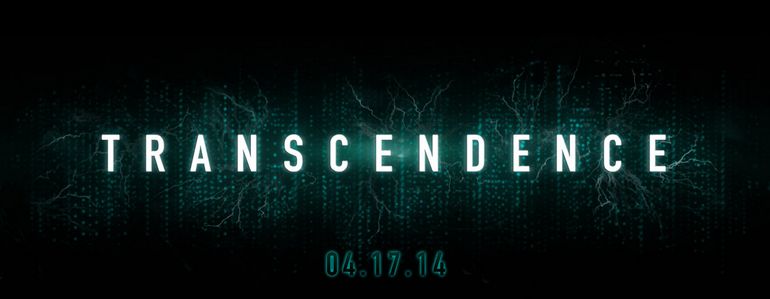
Today I paid a visit to the Internet Movie Data Base (IMDB.com). It was this week’s most painful experience.

On the very front page, on the featured trailers banner, was my story.

 
Just kidding. It was Wally Pfister and Jack Paglan’s story, titled “Transcendence.” As soon as I saw it, I knew what it would be about. Supercomputers. An anti-technology rebellion. A man uploading his own mind onto a computer in an attempt to save his life.
(Go here for the trailer)

If you were to go into my room, dig through my drawer, find my "Idea-Log," open to page 33, and look at the top margin, you’d see something along the lines of, “Transcendent Artificial Intelligence – scientist uploads brain to computer – gains massive power – society fights back against immorality.”

MY. STORY. I can’t tell you how heartbreaking that is.

On the bright side, the movie looks good. Not only does it feature Johnny Depp and Morgan Freeman, but the story seems deep enough to give the sparkly visuals a good flavor. I commend the writer, Mr. Paglan, on his ability to take an interesting concept and put it in its best light. He was able to do something that I couldn’t, not after years of writing, rewriting, and plot-diagramming. He must be a better human being than I am.

But I’m still whining. This needs to be a constructive experience.

First: What separates his idea from mine?

Well, for starters, the words in my notebook were a skeleton. Not a story. I had a concept that needed setting, characters, relationships. Emotion. From what I gather, Paglan’s story involves a wife that is involved in the whole uploading process. That’s powerful. She’s also his “partner in science” – a nice and relatable dynamic for anyone who gets high on the pure pursuit of knowledge. She is caught between the safety of the world and the life of her husband. An impossible choice.

Duty versus love. Science versus morality. Dichotomies that are intriguing on so many levels.

Second: What is there to be learned from this difference? What do mainstream writers / directors do to bring a concept up to story status?

Let’s see if we can trace a path from the skeleton to the story, starting with, “Transcendent Artificial Intelligence.”

Stories are all about conflict, so we need problems. Problems. What’s wrong with super-intelligent computers? They might turn against us. They might hack our bank accounts or steal our private information and hold it at ransom. They might un-encrypt nuclear launch codes and start a World War III.

Somebody will have to realize this possibility before it becomes a problem. Someone has to speak up. That person will likely amass a fair amount of followers, all believing that the safety of their world is teetering on the edge of a perilous scientific cliff. Because they are desperate, they will resort to violence. Even terrorism.

Anti-tech group. Check.

What’s the other side of the coin? What advantages are there to having genius computers? If every device has access to the internet and its fellow computers, they will be able to compute solutions to humanities greatest problems faster than we could ever imagine. Being the creator of such a device must be exciting. Intoxicating. One might begin to love the computer like his/her own child. Or more than a child.

Love of technology interfering with personal, human relationships? Maternal? Fraternal? Marital?

The computers could find the cure for cancer. They could come up with a perfect system of government. They could unveil the mysteries of God and the universe. They could solve death itself.

Interesting… now death is a token in the game. Is it a race against time? Maybe a father tries to save his son from a terminal illness by creating a super-intelligent computer. But why not twist it a little more?

Maybe we should introduce a villain. Perhaps the president of the anti-tech group? Ehh… he’s just a man, a motivational speaker at best. Leaders are typically not the scary guys. In this case, the leader is probably a political junkie. The anti-tech group will put tension on our protagonist(s) outside of the main good-guy / bad-guy conflict.

So someone else, then. Someone not trained to be a moral leader. Someone adventurous. Someone predisposed to obsession over things like power and creation. An engineer.

Our scientist.

But how can the scientist be the villain? And how can he be intimidating?

What truly makes a villain scary is when they are powerful and unpredictable. This is where the other part of our concept comes in: “scientist uploads brain to computer – gains massive power.”

Our former protagonist now has a mental link to the internet. He can access the whole of human knowledge just by searching his mind. He can perform billions of calculations every second. He is drunk with the power, and quickly becomes a villain. Worse, he is growing too fast to be predictable.

But, then, who’s the protagonist? I heard a quote once that said something like: “The best villains are the ones who are personally related to the protagonists.” The most logical choice, in this case, is a coworker. And then add a little bit of love (emotion-potion) and wallah!

Our protagonist is a coworker and a spouse to the digital scientist.

What’s left? We know that our spouse/coworker protagonist is going to have to choose between the world and her husband. Bu how the heck is she going to be able to do that? That’s a huge choice. In order for our audience to be satisfied at the end of the story, they need to have closure, but we have just introduced a new type of problem: that of conscience. Even after she chooses to shut down the computer, she won’t be able to stop thinking: I just killed my husband. Killed him. Ended him.

She has to realize that it’s okay to let him go, which can happen in a couple of ways. Maybe she finds an old journal of his, in which he proclaims that he would rather die than become evil. Or maybe she discovers that he was evil all along. He hired the anti-tech group to shoot him, knowing that they would be forced to upload his mind to the computer. He planned the whole thing.

Bitter betrayal. And then? Finally. Sweet revenge.


And so there it is, from concept to story. A straight, continuous line. The latter is certainly a lot deeper and more interesting. Now, if only I could do that with my other ideas, I would be a very successful writer!

What are your thoughts?

Sunday, February 16, 2014

Horror-Stories and the Devil

After some crazy Truth or Dare at a party last weekend (involving polar-bear jumps into the cold swimming pool) my friends and I decided it was time for a movie. Of course, a movie.

Of course, a horror movie.

Mental sirens. I had decided long ago that horror was just not my genre, and that I preferred sleep to the bone-chilling thrill. But the title gripped me. Devil.

Most horror-stories I've heard of contain one brand or another of satanic possession, but I'd never heard it put quite so bluntly. Devil. Like in the journalism industry, when they get you to click on articles by inserting those magic words "gruesome" or "disturbing," some twisted part of my brain convinced me to stay in the room for what could only be an "uplifting" movie about Satan.

It actually wasn't that bad. Granted, I couldn't sleep that night, but from a story perspective, it was really thought-provoking (if you want the trailer, go here).

It got me thinking: what strategies do directors and writers employ to create that terror in their audience? I mean, everybody at the party knew that Devil was a work of fiction, but that didn't change their reaction. It didn't change my reaction.

Here are a couple of things I've picked up on:


  • The main character(s) are always alone when bad things happen. I guess this is a way to instill a feeling of hopelessness in the viewer. There's no one to help. Nobody will hear him scream. It also brings on a sort of paranoia, especially when "aloneness" seems to be following them. Don't stay in one place too long. Everybody will leave. Don't go the short way home, traffic is better. Don't talk on your cell phone or you'll be distracted and go somewhere alone.

  • Smart directors will want to keep you on your toes, so they'll mislead you with the music. It will play but nothing bad will happen. This will keep you from hiding under your blankie every time it starts. I've wonder if... oh, my... will he die this time? When's that thing gonna pop out? Maybe...? No, I guess not. *sigh of relief*

  • The best horror movies infiltrate your mental "safe-houses." These are places that, after all your years of life, you have come to accept as safe. For example, if the monster manages to break into the Lead's dreams (Nightmare on Elm Street) it will automatically set you on edge. In Devil, the "safe-house" is an elevator. Who actually believes that they're going to be murdered by Satan if they walk into an elevator? I'd be more concerned about dying from the music.

  • Above all, too much exposure to the "monster" will kill the fear. This is what ruined the movie "When a Stranger Calls" (go here). It would have been scarier if the bad guy had never been shown full-on and if he had gotten away. Instead, the director filmed plenty of shots with the psycho (perhaps this contributed to the 4.9/10 rating).


I'm curious to see how this will apply to my writing. Obviously, music isn't an option, but some of the other techniques could be very effective.

What techniques have you used to create fear in your audience? If you have a story you would like to share, I would be glad to review it. Send me a link or post in the comments!