Showing posts with label creative. Show all posts

Sunday, March 9, 2014

Do Highly-Logical Activities Impair Creativity?

 
This is a question I've had for a while. When a person frequently participates in a highly-logical activity (such as computer programming or Sudoku), does that strengthen or weaken their ability to think creatively?
 
**DISCLAIMER - I don't know much about psychology, so if there's a simple answer, please leave me a note in the comments.
 
I am a computer programmer. In fact, aside from writing, it's really the only major thing I spend my free-time doing. I just love the way it challenges me to break down problems, analyze the components, and put all the little pieces back together in a cohesive, efficient manner. But I also feel like a robot, doing the same calculations over and over and over and over in slightly different contexts. And when I sit down to write after working on my 2D-Shooter, it feels like the only things coming to mind are a bunch of stereotypes. The same ones, over and over and over.
 
That's normal, right? It seems like most writers have trouble with stereotypes, regardless of their favorite pass-times. I have no frame of reference, though. There's no way for me to get inside your head, see what it's like to write from your perspective, and compare to see who has the hardest time. The result is that I have no idea how close I am to meeting my creative potential. It’s maddening, actually.
 
But then there’s the possibility that spending equal times using both hemispheres of the brain (yes, I know neuroscientists have disproved the whole left/right brain thing) can actually greaten one’s creative power. Prominent historical figures like Da Vinci, who were known for both scientific and artistic contributions, seem to be concrete examples of this.

So the question really comes down to: do “left” and “right-brained” activities counteract one another, or are they additive? Was Da Vinci just a prodigy, or did his practice of art and science strengthen him as a whole?
I’m curious to hear what you think!

Tuesday, February 25, 2014

No Looking Back, You Cheater!

This was perhaps the hardest writing exercise I've ever had to endure, which is surprising, given that it's also one of the most common. My inner editor was screaming and tearing at me. Feel free to post your own efforts in the comments or on your blog - I'd love to see them! :)  

Write for ten to twenty minutes without any planning whatsoever. Complete improv. You're not allowed to change ANYTHING once you write it (except spelling errors). Go!


David shuddered as he gazed down the mountainside. There was nobody out tonight. Not that he expected any different, given the date and the time.

Today was different in many ways, but perhaps the most significant of which was that today, of all days, was the one day that he would remember for a very, very long time.

The last day like today was five years ago, on February 14 of 2430. Always Valentine’s Day – David wondered why. Perhaps it was because memories were so critical to the spirit of the holiday. Memories were what made it a holiday. The loving silences, the hand-holding on a park bench. Apparently, none of the other days mattered as much as that one.

As the bitter wind tore at David’s coat, he tried to remember the day before. He was here, wasn’t he? On this mountain, on this trail. Vestigial wisps of sensation tugged at his thoughts, reminders of the cold he had experienced. It has to be here.

David had been following a trail for as long as he could remember, which happened to be twelve hours, thirty-seven minutes. Not a rabbit-trail or the trail of a lover’s perfume, as he ought to have been. A trail that was lost in his mind. It led him through the physical world, out of the city, past the Coastals, and into the outlying forests. Whenever he crossed his path from a previous day, he experienced a sort of déjà vu. When he did not, he would veer off and eventually find his way again.

But what was I doing up here?

Luckily, David had thought to wear boots. There was no way of knowing where the day’s journey would lead, and so he had decided it was best to be cautious.

Other than the boots, though, he wasn’t exactly prepared. He had neglected to bring food, and now his stomach was pinching in complaint. He had also failed to bring chap-stick, and the cold, dry air was making him regret it.

Four long chirps rang out from somewhere in the forest canopy. Echoing around the mountain, David could have sworn they sounded like the electronic bells the schools always used.

Fifteen miles from the City. What’s ringing?

Yanking his boots out of the deep snow, he trudged toward the noise. The sun had finally summited the mountain and was now sweeping its light down towards him on the other side. An eerie quiet followed the chirping.

Then, suddenly, thunderous noise, like giant rocks falling on rocks, boomed in all directions. David screamed and tripped while trying to locate the source. Sitting at the base of a wet tree, he curled up and waited for it to end. It sounded like the entire mountain had split and was now sliding down it’s massive face.

David didn’t understand what happened next.

Déjà vu.

Where did it come from? Surely, he had never heard such a horrible din which pierced the hands he held against his ears. There was no stopping it, no blocking it. He could only wait.

Wait… wait.

A hand brushed his shoulder – a hand that he did not control. David realized that he had closed his eyes and allowed them to flutter back open, only to witness the strangest thing. A girl, about his height, brown-hair, angel-eyes, and elfin features, was seated right in front of him. Completely, undoubtedly, hovering.

David’s heart jumped into his throat. He didn’t know whether to move, or if he could move anymore. As of that moment, his arms were arrested at his sides, unresponsive to the commands of his brain.

“I have something to tell you,” said the girl, without moving her lips. Her voice came from everywhere, but seemingly from nowhere. The world was crumbling around them. “Do you want to hear it?”

Words floated out of his mouth before he could catch them. “Tell me the words.” With horror, David realized that he had not consciously made an effort to speak. His lips had not moved. And yet, the voice that responded was his own.

Wait. No, who are you? he tried to say, but the air moving through his windpipe made no noise. It was like suffocation, like a cloth had been stuffed in his mouth.

The girl leaned in until her icy breath prickled his ears.

And she spoke the words.

David let his mouth drop open, knowing full well that no sound would come out, even if he tried to speak. What he had just heard was divine, absolutely the most important words anyone had likely heard in the history of the world. He wanted to thank her, to burst out into tears, but it seemed he was incapable of everything but staring.

He now knew why the world forgot, why there was never anything before waking up, except on those few days. He knew why there was no hope, and why people did bad things. Everything came into crystal-clear focus. Death was not an obstacle, not even something to fear, but rather a step, a pinprick in the fabric of existence. David decided that perhaps it was time. Perhaps it was okay to die.

And then, only then, he woke up.


Wednesday, February 19, 2014

From Concept to Story


Today I paid a visit to the Internet Movie Data Base (IMDB.com). It was this week’s most painful experience.

On the very front page, on the featured trailers banner, was my story.

 
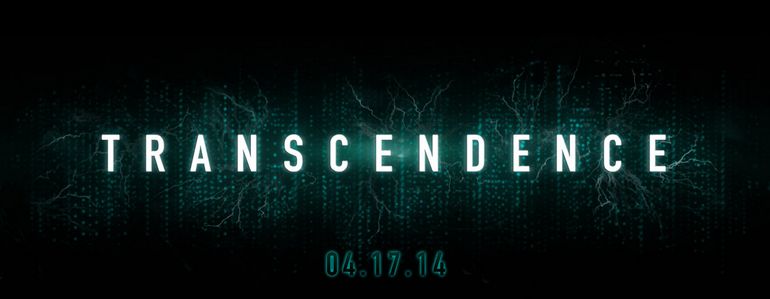
Just kidding. It was Wally Pfister and Jack Paglan’s story, titled “Transcendence.” As soon as I saw it, I knew what it would be about. Supercomputers. An anti-technology rebellion. A man uploading his own mind onto a computer in an attempt to save his life.
(Go here for the trailer)

If you were to go into my room, dig through my drawer, find my "Idea-Log," open to page 33, and look at the top margin, you’d see something along the lines of, “Transcendent Artificial Intelligence – scientist uploads brain to computer – gains massive power – society fights back against immorality.”

MY. STORY. I can’t tell you how heartbreaking that is.

On the bright side, the movie looks good. Not only does it feature Johnny Depp and Morgan Freeman, but the story seems deep enough to give the sparkly visuals a good flavor. I commend the writer, Mr. Paglan, on his ability to take an interesting concept and put it in its best light. He was able to do something that I couldn’t, not after years of writing, rewriting, and plot-diagramming. He must be a better human being than I am.

But I’m still whining. This needs to be a constructive experience.

First: What separates his idea from mine?

Well, for starters, the words in my notebook were a skeleton. Not a story. I had a concept that needed setting, characters, relationships. Emotion. From what I gather, Paglan’s story involves a wife that is involved in the whole uploading process. That’s powerful. She’s also his “partner in science” – a nice and relatable dynamic for anyone who gets high on the pure pursuit of knowledge. She is caught between the safety of the world and the life of her husband. An impossible choice.

Duty versus love. Science versus morality. Dichotomies that are intriguing on so many levels.

Second: What is there to be learned from this difference? What do mainstream writers / directors do to bring a concept up to story status?

Let’s see if we can trace a path from the skeleton to the story, starting with, “Transcendent Artificial Intelligence.”

Stories are all about conflict, so we need problems. Problems. What’s wrong with super-intelligent computers? They might turn against us. They might hack our bank accounts or steal our private information and hold it at ransom. They might un-encrypt nuclear launch codes and start a World War III.

Somebody will have to realize this possibility before it becomes a problem. Someone has to speak up. That person will likely amass a fair amount of followers, all believing that the safety of their world is teetering on the edge of a perilous scientific cliff. Because they are desperate, they will resort to violence. Even terrorism.

Anti-tech group. Check.

What’s the other side of the coin? What advantages are there to having genius computers? If every device has access to the internet and its fellow computers, they will be able to compute solutions to humanities greatest problems faster than we could ever imagine. Being the creator of such a device must be exciting. Intoxicating. One might begin to love the computer like his/her own child. Or more than a child.

Love of technology interfering with personal, human relationships? Maternal? Fraternal? Marital?

The computers could find the cure for cancer. They could come up with a perfect system of government. They could unveil the mysteries of God and the universe. They could solve death itself.

Interesting… now death is a token in the game. Is it a race against time? Maybe a father tries to save his son from a terminal illness by creating a super-intelligent computer. But why not twist it a little more?

Maybe we should introduce a villain. Perhaps the president of the anti-tech group? Ehh… he’s just a man, a motivational speaker at best. Leaders are typically not the scary guys. In this case, the leader is probably a political junkie. The anti-tech group will put tension on our protagonist(s) outside of the main good-guy / bad-guy conflict.

So someone else, then. Someone not trained to be a moral leader. Someone adventurous. Someone predisposed to obsession over things like power and creation. An engineer.

Our scientist.

But how can the scientist be the villain? And how can he be intimidating?

What truly makes a villain scary is when they are powerful and unpredictable. This is where the other part of our concept comes in: “scientist uploads brain to computer – gains massive power.”

Our former protagonist now has a mental link to the internet. He can access the whole of human knowledge just by searching his mind. He can perform billions of calculations every second. He is drunk with the power, and quickly becomes a villain. Worse, he is growing too fast to be predictable.

But, then, who’s the protagonist? I heard a quote once that said something like: “The best villains are the ones who are personally related to the protagonists.” The most logical choice, in this case, is a coworker. And then add a little bit of love (emotion-potion) and wallah!

Our protagonist is a coworker and a spouse to the digital scientist.

What’s left? We know that our spouse/coworker protagonist is going to have to choose between the world and her husband. Bu how the heck is she going to be able to do that? That’s a huge choice. In order for our audience to be satisfied at the end of the story, they need to have closure, but we have just introduced a new type of problem: that of conscience. Even after she chooses to shut down the computer, she won’t be able to stop thinking: I just killed my husband. Killed him. Ended him.

She has to realize that it’s okay to let him go, which can happen in a couple of ways. Maybe she finds an old journal of his, in which he proclaims that he would rather die than become evil. Or maybe she discovers that he was evil all along. He hired the anti-tech group to shoot him, knowing that they would be forced to upload his mind to the computer. He planned the whole thing.

Bitter betrayal. And then? Finally. Sweet revenge.


And so there it is, from concept to story. A straight, continuous line. The latter is certainly a lot deeper and more interesting. Now, if only I could do that with my other ideas, I would be a very successful writer!

What are your thoughts?

Tuesday, February 11, 2014

Penny Prompt - Something Ugly


Here's another penny-prompt that I did last weekend:


2) Write about something ugly–war, fear, hate, or cruelty

Johnson swung the barrel of his rifle around in a complete circle, taking in the vast ruined city. ETA of his rescue-chopper was thirty minutes and counting. The air was ghostly quiet.
Might as well do a sweep.

One devastated building blanketed in ivy drew his attention, partially because of the enormous letters painted beneath the ropy vines. He squinted, trying to make out the faded characters.

“ST. MATHESON’S RE----- -OME FOR CHILDREN”

“Refuge home…” he mouthed, intrigued. It looked like it come from an aged fairy-tale. Old brick, faded colors that could’ve been happy – plus, fairy-tales always had orphanages. We drove these kids out. Guilt struck deep beneath his armor as he thought of his own child, only three years old, back home.

He stepped up to a hole in the brick wall and peered in. It was dark and covered in rubble, but he could see light further down the hallway. Probably a battery-powered emergency light. Most public buildings had them.

Despite the fact that nobody was supposed to be there, Johnson couldn’t help but step lightly as he entered the building. It felt haunted, like the ghosts of all his victims had converged on this one spot. A sickening idea struck him: what if there are bodies here? Childrens’ bodies? Now that it occurred to him, it was probably true. Everybody had been taken by surprise when his team swept through, not just the militia. Even the friendlies, even the ones who weren’t supposed to get involved.

On second thought, maybe he ought to go and wait out in the open.

Johnson turned and stepped back into the sunlight. Today wasn’t the day for violence. There would be other opportunities to forage through the tangled, mystical ruins on supply-runs with his team. Natives from the neighboring town would come in and remove the dead. Maybe then they could –

Johnson’s ears perked up. He thought he heard… no, it can't be

He listened closer.

The sound came again.

“Oh my God!” he shouted, ripping his radio out and pressing the button. “Where are you, Mariel?”

Static. “Captain, are you alright? Are the hostiles back?”    

“The hell they are! I’ve got a survivor on –"

“What are you saying? Calm down! Nobody survived that attack, sir, everyone’s gone – ”

“Don’t talk to me!” He screamed. “I hear it right now! Somebody is crying, I can hear it! Get a medic, now!” He dropped the radio and brought his rifle up to ready position. His own heartbeat was knocking the air out of his lungs. Looks like it’s into the dark, after all.

Muffled static. Finger on trigger.

Muscles tensed, like a prowling cat, Johnson tried to maintain composure. Nobody’s supposed to be alive. Nobody is alive. He proceeded quietly into the darkness, chanting the words over and over in his head.

The sound grew more and more distinct as he advanced through the black hallways. Just a friendly, he began to think, no longer able to accept that he was hallucinating. The crying was too loud, too clear. He kept his eyes forward, ignoring the eerie, peeling wallpaper decorated with flowers and clouds.

There was a shadowy doorway just up ahead. That’s where the sound was coming from, he could tell by the way it echoed. With his lips, he formed the words, “who’s there?” but no sound came out. Fear had caught him by the throat.

SCHHH! “Captain?”

Johnson yelped and pulled the trigger. A deafening bang cut him straight to the bone, and somewhere in front of him, rubble was knocked loose. Johnson disconnected his radio and brought his gun straight back up, panting heavily.

Damn it, damn it, damn it, please, Lord, help me…

There was a moment when he couldn’t hear because his ears were ringing, but then the noise subsided and all that was left was a soft crying. Exactly as before. It hadn’t changed at all. It was a quiet, weak voice, and… somewhat familiar.

Fear turned to terror. Icy terror.

“Oli?” he called out, voice trembling. “My s- oh, God, my son?”

The crying stopped abruptly. Like it had been waiting all along.  

Sunday, February 9, 2014

Penny Prompt - Finding Gold

I've never been much a fan of one-line prompts. They always seem too constricting, too boring, too sappy. But today, after a long while just staring at my computer screen with a blank expression, drool running down my chin, I decided to look into them. And, while my opinion of one-line prompts hasn't changed, I've found at least one benefit to using them in my day-to-day writing.

They are absolutely inexhaustible. Yes, indeed, I will never have to wonder. I could write my whole life and never finish with all the ones on the internet.

And that is why I have elected to call them penny-prompts.


1) You’re digging in your garden and find a fist-sized nugget of gold

 
I had a smile on my face the whole day. It was time. Finally, it was time.
 
After twenty whole years, I circled around the ruined house and into the backyard, carrying a shovel from the truck. There was the same muddy lump in the corner, only now it was covered in grass and dandelions. Nature had offered its own respects to the shrine of my childhood.
 
I began to dig, without hesitation. Normally, such an occasion would require a moment of silence, but this felt different. This was me. I wasn’t doing this for anyone else. Little Me was still down there, the curious, wild ten-year-old who dressed up like a pirate for school. He needed the new me, the old me. He needed my advice more than anything.
 
The sun grew hotter with each shovel-full of dirt. Finally I struck something hard – like a pirate, looking for treasure. Brushing away a thin layer, a rotting piece of wood came into view, littered with holes and worms.
 
Blood pounded in my temples. Hey, little guy.
 
With the shovel, I worked around the piece of wood until I had carved out an entire box. Then, with a grunt, I lugged it up and out of the hole.
 
Geez, how did I lift this thing?
 
The padlock on my old treasure chest was still there, but it was easy enough to break away from the wood. My breath caught as it fell onto the grass.
 
I am about to go back in time twenty years. Three, two, one…
 
The lid swung open. So did my mouth.  
 
“What in the…”
 
The little pirate inside me had a heart attack. Neither of us had ever seen so much real gold in our lives.